


The Historical Museum of the Palatinate in Speyer is one of Germany's most important exhibition venues. With its impressive collection and high-calibre special exhibitions, it has been attracting visitors from Germany and abroad for decades. The forum – the central courtyard of the historic building – also offers a unique space for events. In recent years, its use has been hampered by leaks in the existing glass roof. Now, the new sunbelt® A61 glass roof provides a solution. This solar control glass by arcon impresses with its weather resistance, transparency and modern sun protection – ideal conditions for year-round use.
Historical Museum
sunbelt® A61 provides a light-flooded and weatherproof courtyard at the Museum Speyer
Every millimetre counts for the glass roof of the Historical Museum of the Palatinate
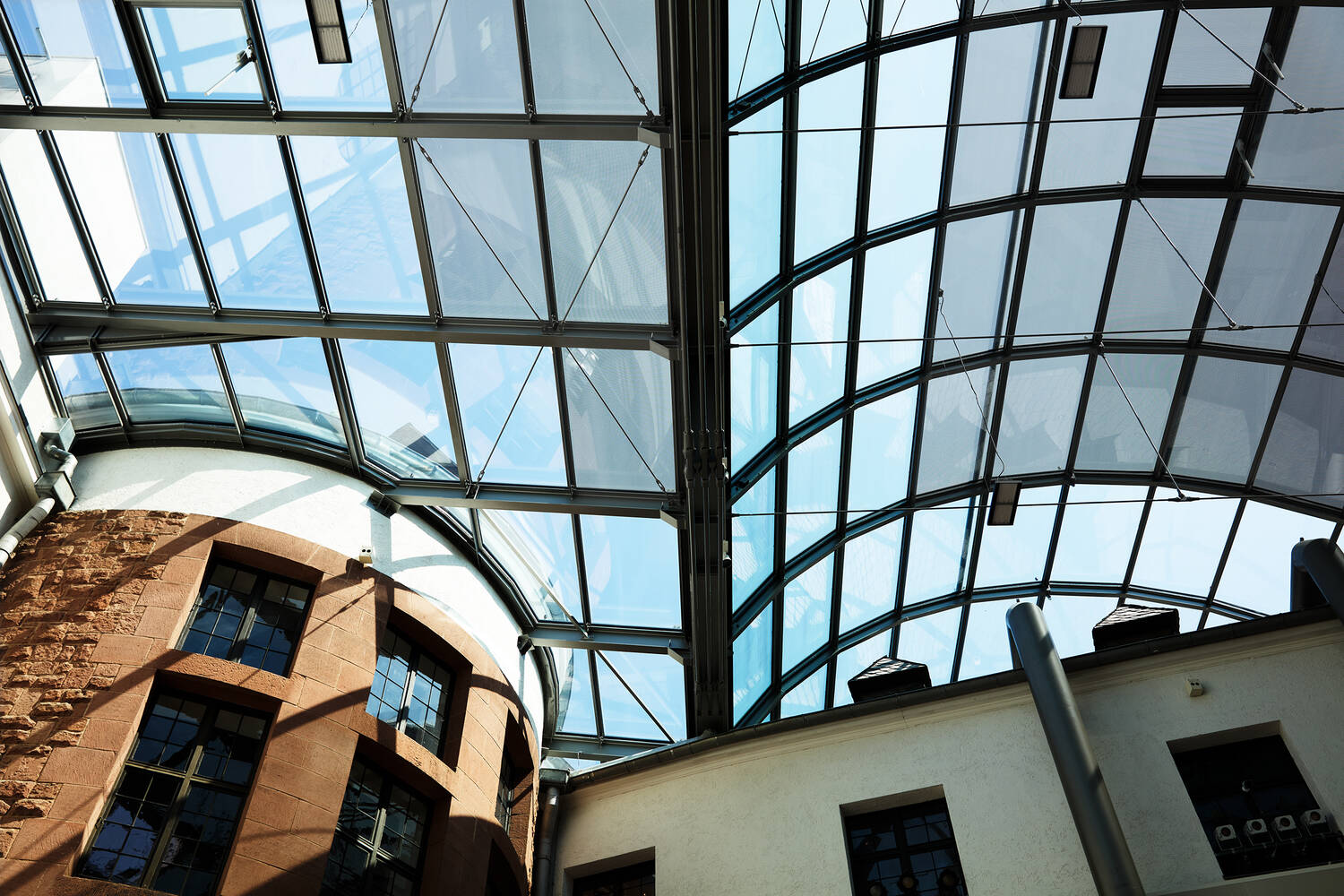
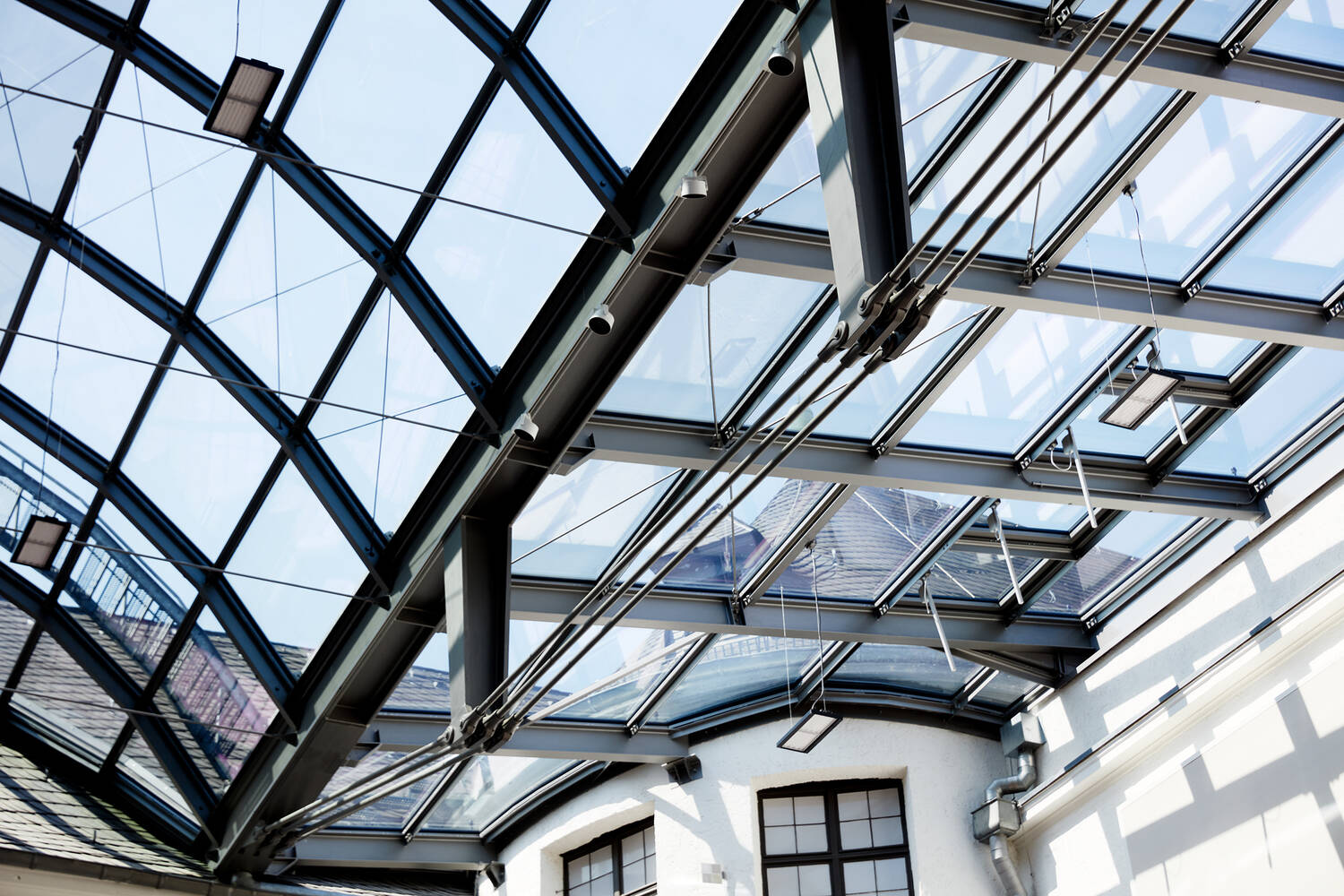
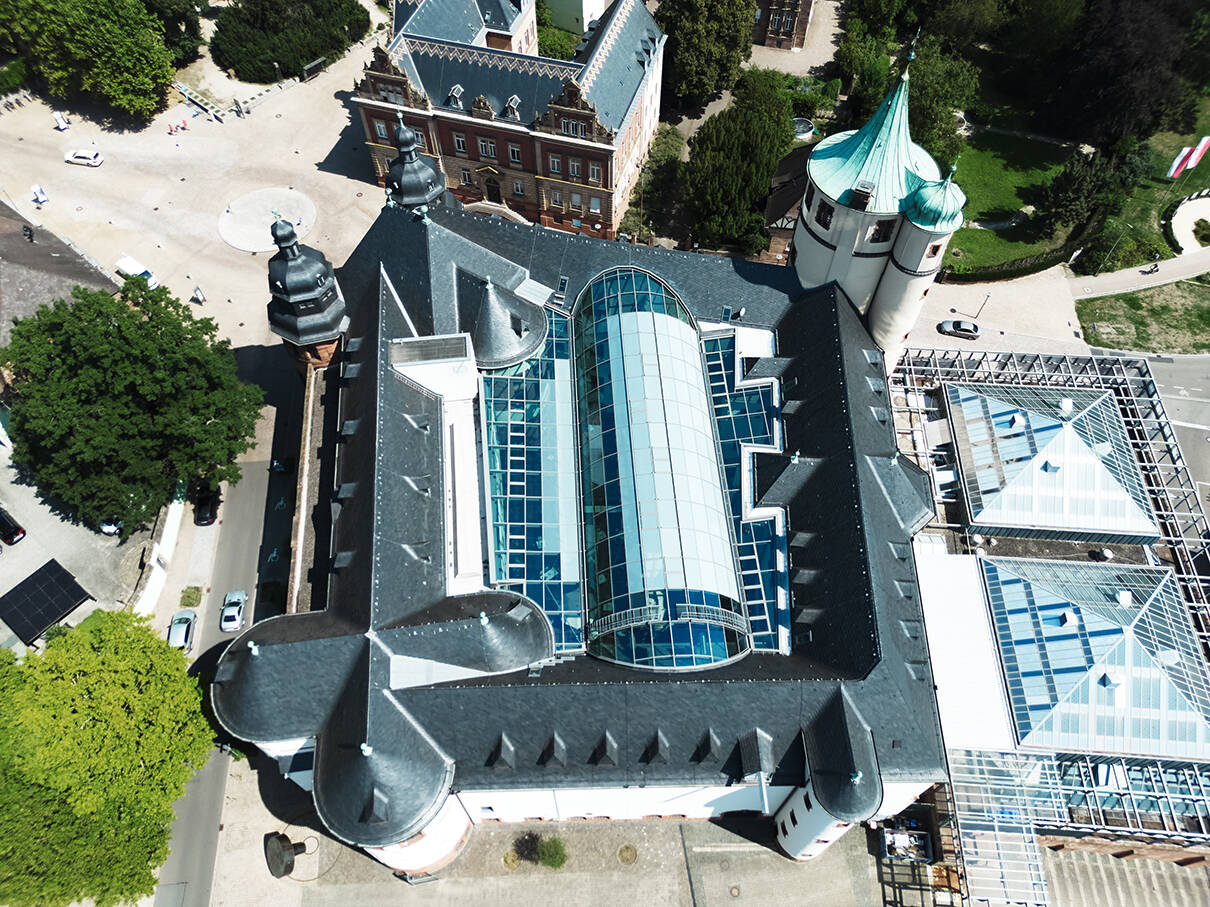
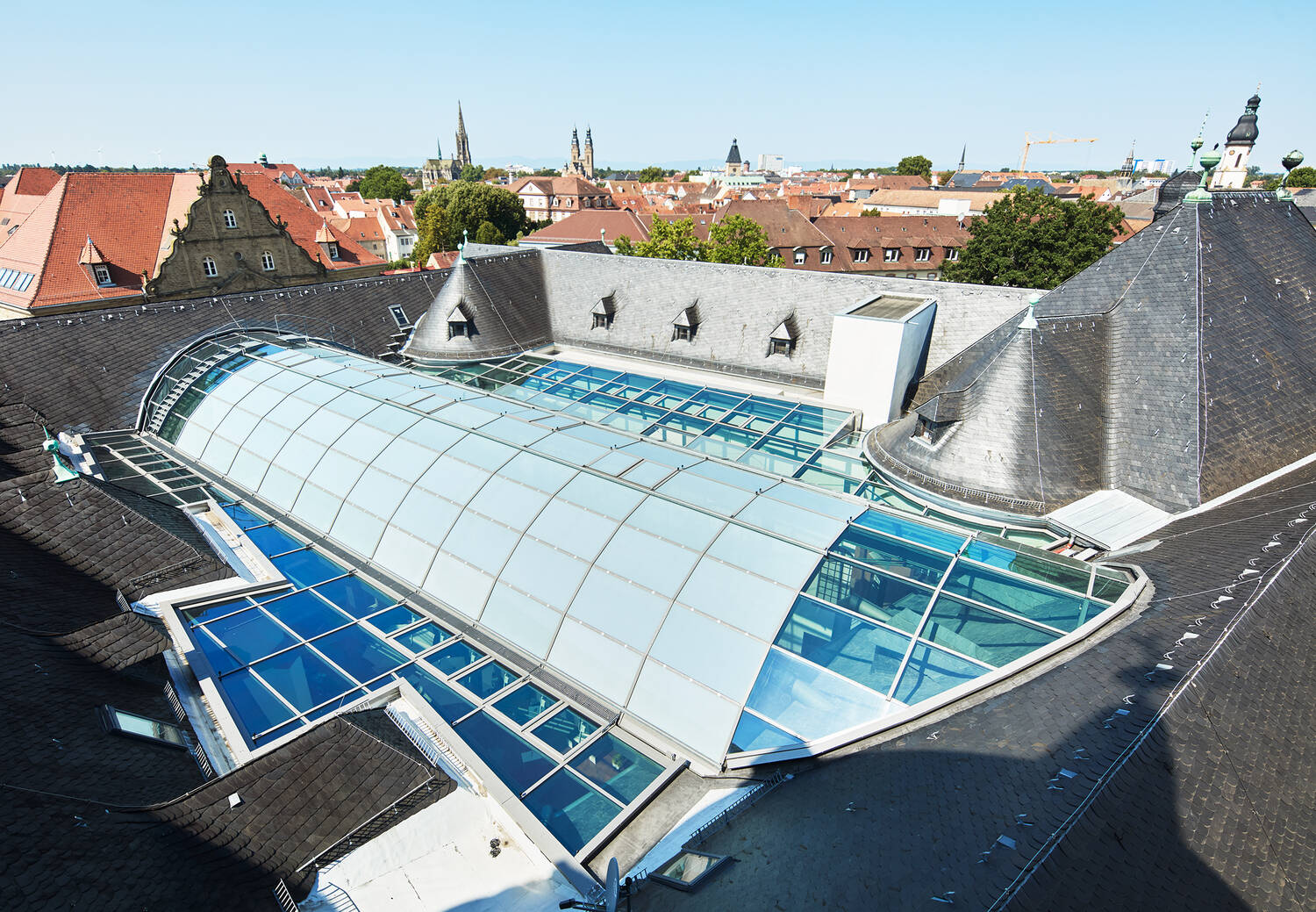
With several hundred thousand exhibits, high-calibre special exhibitions and a wide-ranging programme of events, the Historical Museum of the Palatinate in Speyer attracts a diverse audience. The listed museum building from 1910, designed by Gabriel von Seidl, dominates the cityscape as a four-winged sandstone structure and, together with the nearby cathedral, forms a cultural centre of supra-regional significance. Unique exhibits, spectacular presentations and the combination of history and the present make the museum a lively place of discovery.
Since 1999, the first children's and youth museum in Rhineland-Palatinate has complemented the museum's offerings, giving young visitors interactive access to historical topics. With current public exhibitions such as ‘Caesar & Cleopatra,’ ‘The Little Dragon Coconut’ and "Horst Hamann – Imperial Cathedral in Speyer. Vertical Photographs‘ and future exhibition projects such as “Superheroes” and ’Empress Elisabeth – misunderstood & unforgotten", the museum is continuing its successful exhibition tradition. In recent years, however, events in the inner courtyard have been limited because the old glass roof was leaking. Since last year, the area has been fully usable again thanks to effective solar control glass. ‘The decisive factor for the type of roofing was the column-free usability of the inner courtyard, with special consideration given to the requirements of the historic building fabric and monument protection,’ says architect Thomas Langendorf, describing the design idea.
Multifunctional glass called sunbelt®
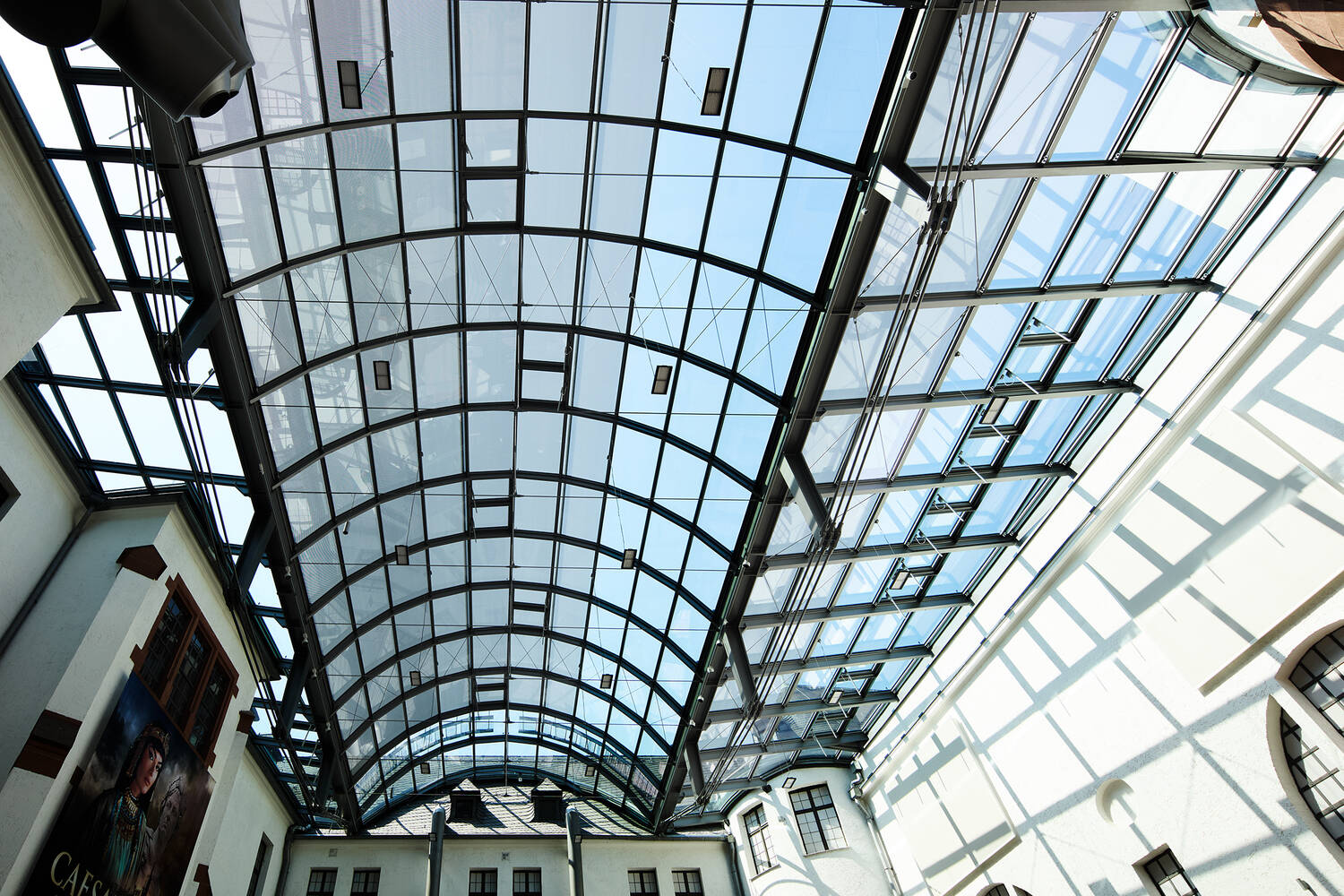
sunbelt® A61 with a heat transfer coefficient (Ug) of 1.0 W/m²K was used – a high-performance glass roof system that combines energy efficiency with design appeal. The outer pane consists of 8 mm thick ESG-HST safety glass. It was important for arcon's client to find a solution that took both functional and design considerations into account in line with the historic surroundings: ‘With the A61, we were able to use a modern system that blends harmoniously into the existing structure.’
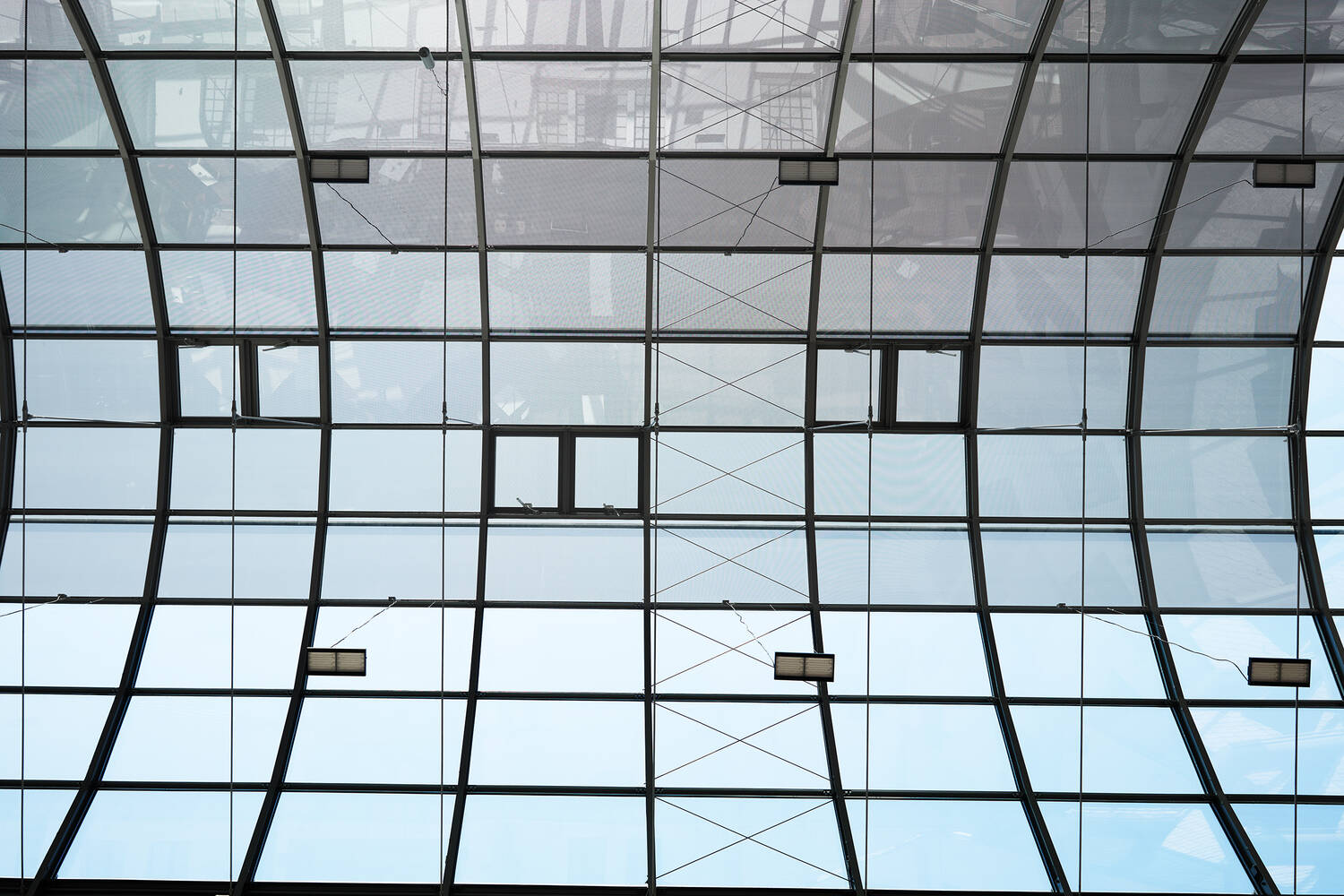
‘The glazing should not only be accessible for maintenance and cleaning, but also be as close as possible to the original structure – especially due to the well-thought-out concept for night-time cooling and ventilation,’ explains Bojan Gvozdarevic from Hunsrücker Glasveredelung Wagener. ‘Differently printed glass surfaces with transparency levels ranging from 0 to 85 percent – achieved using digital printing technology – create specific temperature differences under the roof. These cause air masses to move, allowing warm air to be discharged to the outside via the roof flaps.’ The new glass roof also meets the highest energy requirements.
The sun protection glass used with its special coating reflects radiant heat: ‘This layer acts like a mirror,’ explains Langendorf. ‘This makes the temperature under the roof feel significantly higher than it actually is – a noticeable gain in comfort that also saves heating energy.’ In summer, on the other hand, the roof plays the main role in preventing overheating. The intricately printed grid in the glass provides effective sun protection – without any moving parts. ‘This means we can do without maintenance-intensive shading systems and still ensure a pleasant indoor climate.’
Precision work above the roofs of Speyer
The construction work was no less demanding. The roof rises to a height of up to 17 metres – a real challenge, especially in the central area with its barrel roof geometry. ‘Working at this height required extreme precision, especially in the barrel-shaped roof sections, where every millimetre counts.’ The project was further complicated by a steel primary structure that was outside the specified tolerance. Only by developing and installing a precisely coordinated secondary substructure was it possible to professionally install and permanently seal the glass structure. ‘Without this intermediate step, the long-term tightness of the system would not have been guaranteed,’ said the managing director. ‘This required not only technical expertise, but also close coordination with all project participants.’
Logistics also posed major challenges for the assembly team: in the middle of Speyer's old town and in the immediate vicinity of the cathedral, the construction site area was very limited. There was hardly any space available for traditional storage and manoeuvring. ‘All transport had to be carried out using a gantry crane – that was the only practical solution,’ reports Gvozdarevic. Well-planned material management was essential. At the same time, it was necessary to react quickly when the weather turned bad: ‘Every evening, the roof areas that were still open were provisionally covered with tarpaulins. This was a measure that required extreme care and daily discipline.’
Contemporary design for a historic heritage site
The new glass roof at the Historical Museum of the Palatinate in Speyer not only marks a structural advance, but also makes an architectural statement. It forms a sensitively coordinated connection between historical substance and contemporary technology. ‘The design of the roof is much more than just a shell – it mediates between the past and the present and shows that a historic building like this can evolve without losing its identity.’
With a total area of 845 square metres, an impressive, column-free glass structure was created – 321 square metres of which were covered with the differentiated digital print described above. The design thus meets both functional energy and design requirements. ‘The interplay of light, structure and transparency makes the roof a special element within the museum ensemble,’ Gvozdarevic continues. ‘We are delighted that our work has contributed to making this historic site fit for the future – technically, atmospherically and architecturally.’
Data about the project
| Client | Stiftung Historisches Museum der Pfalz Speyer, Domplatz 4, 67346 Speyer |
| Architect | langendorf architektur, Im Winterrot 69, 76228 Karlsruhe |
| Glass supplier & construction | Hunsrücker Glasveredelung Wagener GmbH & Co. KG, Otto-Hahn-Straße 1, 55481 Kirchberg |
Weitere Referenzen
Bahnhof Bitterfeld
Bitterfeld-Wolfen
Edelman Fossil Park & Museum
Sewell, New Jersey
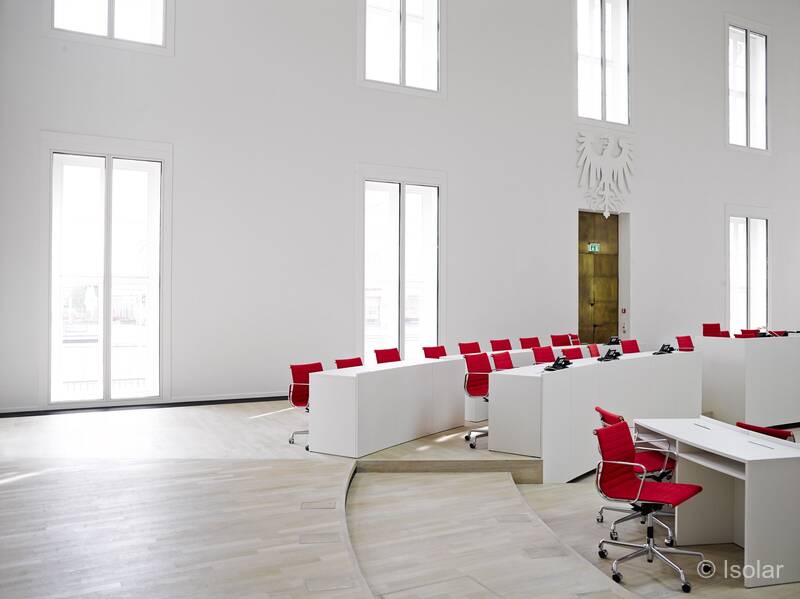
Landtag
Potsdam